Product Description
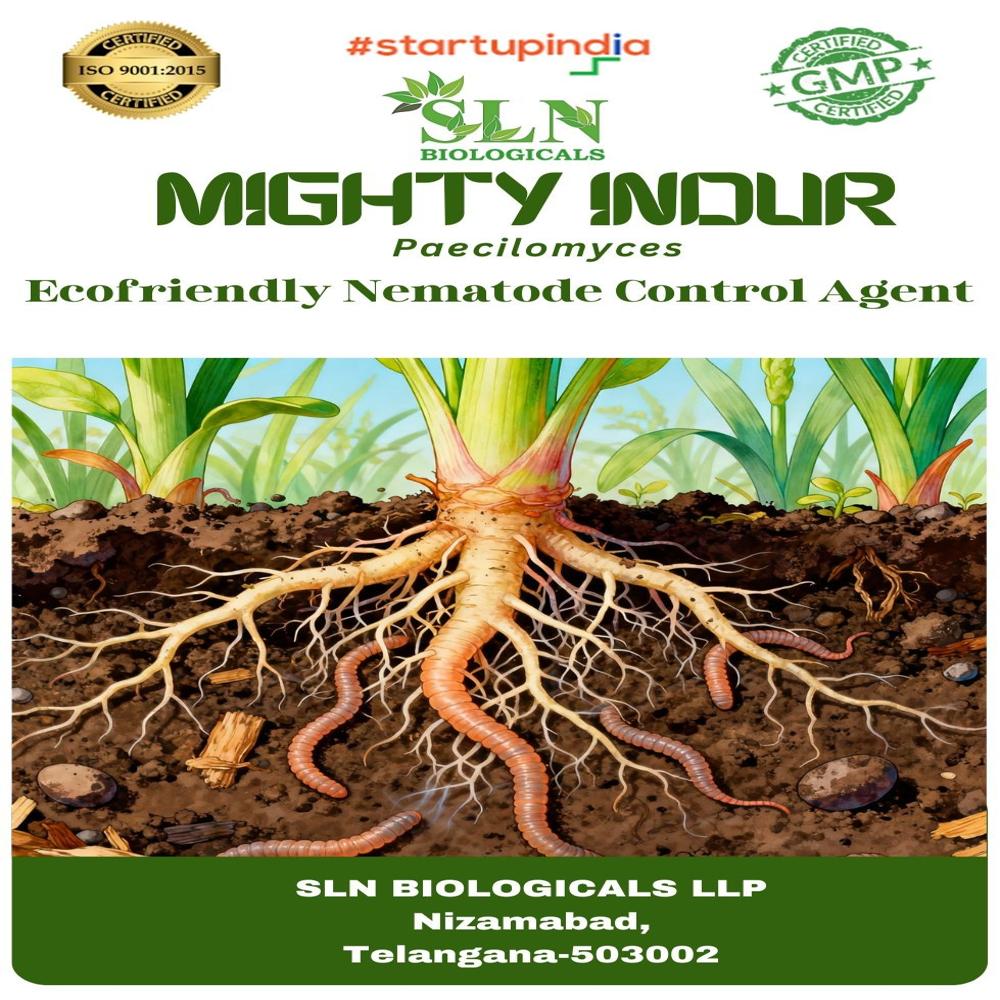
Paecilomyces Lilacinus Organo Based Eco Friendly Bio Pesticideis a bionematocide which contains spore count of 1x 10⁻⁸ per gm product.It efficiently controls the root knot nematodes, cyst nematodes, burrowing nematodes.
Target Crops
All vegetable, fruit and ornamental crops.
Method of application:
Soil application : 2 kg per acre along with FYM
Seed treatment: @ 4-5 gm per kg of seeds as per standard wet treatment.
Seedling treatment: @ 100 g/l prior to planting.
Method of Application
SuspendPaecilomyces lilacinus in sufficient water (500g/100L) to achieve uniform application. Apply at the rate of 100-200g per cubic metre (loose) of greenhouse potting mix, soil or planting beds.
Paecilomyceslilacinuscan be applied through low pressure watering nozzles such as fan nozzles orother watering systems (drip system) after filtering with filters. Agitate to maintain suspension. For best effect, treat potting mix several days before use for seeding or transplants.
Frequency of application
Two to three applications in vegetables ornamentals and 4-5 applications in lawns and landscape crops are recommended. In the case of high infestation multiple applications are recommended. Applications during early stages of plant growth protect the plant during critical stages of development.
CFU: 1X10⁻⁸(as per CIB registration)
Package: 1 KGCarriermaterial: Talc powder.
Eco-Conscious Crop ProtectionPaecilomyces Lilacinus is an organically certified bio pesticide designed for eco-friendly and effective crop protection. Its advanced formulation targets plant-parasitic nematodes, helping to safeguard yield and plant health while minimizing environmental impact.
Versatile Application MethodsThis bio pesticide offers flexible application methods including soil application, seed treatment, and drenching. It is dispersible in water and can be conveniently used across various farm operations, ensuring comprehensive coverage for different growth stages and crop types.
Safe for Beneficial Life and the EnvironmentPaecilomyces Lilacinus is non-toxic to humans, animals, and beneficial insects. Its eco-friendly nature and compatibility with most organic soil amendments make it an excellent choice for organic and sustainable farming practices, without compromising on safety or ecological integrity.
FAQs of Paecilomyces Lilacinus Organo Based Eco Friendly Bio Pesticide:
Q: How should Paecilomyces Lilacinus bio pesticide be applied to crops?
A: Paecilomyces Lilacinus can be used through soil application, seed treatment, or drenching. Mix the recommended dosage (510 kg/ha or as advised) with water and apply directly to soil, seeds, or seedling roots for optimal protection against nematodes and soil pathogens.
Q: What crops benefit most from this bio pesticide?
A: This bio pesticide is suitable for a wide range of crops including vegetables, fruits, cereals, pulses, and plantation crops. Its broad-spectrum action targets nematodes and other soil-borne pathogens commonly affecting these crop types.
Q: When is the optimal time to apply Paecilomyces Lilacinus?
A: The best results are achieved when the product is applied during field preparation, before sowing, or at the early stages of crop growth. Early application ensures the establishment of beneficial organisms and maximizes nematode control throughout the crop cycle.
Q: Where should the product be stored for best shelf life?
A: Store the bio pesticide in a cool, dry place away from direct sunlight to maintain its effectiveness and cell viability. Proper storage helps ensure the product remains potent throughout its 12-month shelf life from the manufacturing date.
Q: What are the key benefits of using Paecilomyces Lilacinus?
A: Key benefits include eco-friendly pest management, safety for humans and beneficial insects, compatibility with organic amendments, and effective suppression of nematodes and soil-borne pathogens. Its non-toxic nature also supports sustainable and organic farming initiatives.
Q: Is Paecilomyces Lilacinus compatible with other soil amendments?
A: Yes, this bio pesticide is compatible with most organic soil amendments, making it easy to integrate into existing organic or conventional farming practices without adverse interactions.









 Send Inquiry
 Send Inquiry
 Send SMS